Teaching Young Volleyball Players to Serve
Written by Rob Browning, Head Volleyball Coach, Saint Mary's College
Of all the skills we must teach young players, serving and passing have to be at the top of the list. Mastery takes a long time, which means they need to start early and practice repeatedly.
Serving is also one of the few skills in volleyball where young players can experience real, measurable success quickly. A serve that clears the net is an immediate win. That feedback loop matters for confidence, and confidence is what keeps players coming back.
Here's the foundation. The full guide, serving activities, problem-solving progressions, and tips for players who can't get it over yet, is inside GMS+.
Start With Simplicity
No matter how many different ways there are to teach the overhand serve, simplicity has to be the common thread. The more moving parts you add, the harder it is for a young player to repeat the motion consistently.
Three things to focus on first: the toss, the step, and contact. Get those right and everything else follows.
The Toss
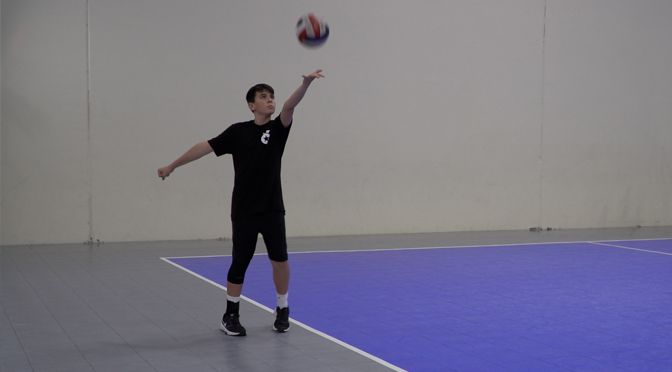
Eliminate extra movement. No bending at the knees. The tossing arm shouldn't move much. The simpler the toss, the more consistent the serve.
The ball shouldn't go too high, just high enough that it begins to come down before contact. A ball at its apex and barely dropping is much easier to hit cleanly than one that's falling fast from a high toss.
Watch for this: kids who toss the ball back toward their hitting hand. When that happens the ball drifts behind them, and they can't generate any power. The toss needs to go in front of them, in a position where stepping into it feels natural.
The Step
A big step in the direction of the serve generates power. This is especially important for younger players who don't have the arm strength to get the ball over from a static stance.
If a player isn't stepping, it's often because they tossed the ball back toward their hitting hand. Fix the toss and the step usually follows, they'll feel the need to move into the ball once it's in front of them.
Contact
Heel of the hand. It's the hardest part of the hand, which means more distance, and it's the best surface for taking spin off the ball. This applies from the youngest players all the way through college.
After contact, the hand should drop naturally down toward the thigh. Coaching players to stop their hand in front of them after contact takes extra energy and doesn't improve the serve. Let it drop along the same natural trajectory.
A useful question to ask after each serve: "Where did it hit your hand?" Have them show you. Upper palm or fingers means less distance and less control. Heel of the hand is the goal.
The Full Guide Is Inside GMS+
The three mechanics above are the starting point. The full GMS+ guide covers everything a coach needs to actually run serving practice, and to help the players who are struggling most:
- Serving activities and drills with built-in progress tracking
- Wall serving: how to set it up and why it produces more reps than over-the-net practice
- Problem-solving progressions for players who can't get the ball over from the service line
- When and how to teach a fist contact as a temporary tool — and when to move away from it
- Teaching the underhand serve as a bridge, not a crutch
- Introducing the jump float serve earlier than most coaches think to
- How to use in-practice games to get more serving reps without disrupting practice flow
Free to access. Create your GMS+ account and the full guide is here.