Coaching Volleyball at Different Levels: From Junior High to College
The principles don't change. The application does. A level-by-level guide to adapting your coaching approach as your athletes, and your program, develop.
The GMS methodology is built to work at every level. We've used it to win Olympic gold medals and to help first-year junior high coaches run their first practice. The principles, science-backed, simple over complex, game-like reps, external focus, competitive environments, hold at every competitive tier.
But how you apply those principles changes dramatically depending on who is standing across the net from you and who is standing on your side of it. The adjustments you make for a group of 12-year-olds who have never seen a rotation call are completely different from the adjustments you make for a group of college players who've been in a system for three years.
This post is for coaches at all levels who want to understand not just what to do, but why the right approach changes and what to adjust as athletes grow. Whether you're a junior high coach looking to build something that lasts, a high school coach adding sophistication to a developing program, or a college coach working on precision and depth, the level-by-level framework below applies.
What Stays the Same Across Every Level
Before getting into what changes, it's worth being explicit about what doesn't.
The core of effective volleyball coaching, prioritizing quality reps, keeping practice game-like, using external cues over internal ones, building competitive environments, choosing simplicity over complexity, applies from 6th grade through Division I. Coaches who understand these principles at a fundamental level don't need a different philosophy for each level. They need a different application.
Volleyball is a skill sport at every level. The better-skilled team wins the overwhelming majority of the time, regardless of size, strength, or conditioning differential. This is even more true at younger ages. Every minute spent on non-volleyball activity, whether that's extended stretching routines, long conditioning runs, or overlong team meetings, is a minute not spent building the skills that actually determine who wins.
A skill sport demands skill practice. From 10u to D1, the best investment you can make in your program is maximizing the quality and quantity of volleyball-specific reps your athletes accumulate.
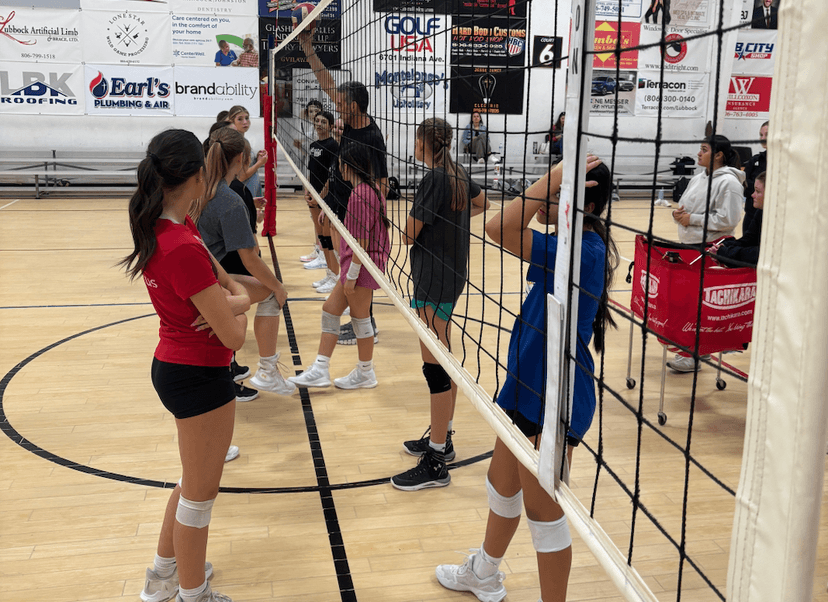
Middle School and Youth: Build the Love First
The Goal at This Level
The primary objective of coaching middle school and youth volleyball is not winning. It is not teaching the 5-1. It is not developing specialists.
The primary objective is this: make volleyball so engaging, so fun, and so rewarding that athletes want to come back next year.
Everything else is secondary. At the youth level, the coaches who produce the best outcomes long-term are the ones who keep athletes in the sport. An athlete who plays through high school and into college, regardless of where they start, will develop far more than one who burns out or quits because their early experiences were joyless.
Practice Design: Play Volleyball Immediately
Young athletes learn by doing, not by listening. Keep instruction short. Get them touching the ball within the first few minutes of practice. Long explanations, extended warmup lines, and elaborate drills with too many moving parts lose young athletes quickly.
The most effective practice structure for youth players is built around small-sided games and mini-competitions, formats where every player is active, the ball is in play, and the score matters. A 3v3 game where every player serves, passes, and hits in every rally teaches the full range of volleyball skills in a game context that young players find genuinely engaging.
Offensive System: Keep It Simple and Broad
For young players, a simplified offensive system that allows multiple athletes to experience multiple positions is more valuable than early specialization. A 6-3 system, where three players rotate through the setter role in two consecutive rotations, is an excellent choice at this level. It distributes setting opportunities across multiple athletes, keeps all players engaged as passers and hitters, and is simple enough that athletes can focus on the game rather than the system.
Some coaches feel pressure to run a 5-1 early to prepare players for high school volleyball. The counterargument: you can teach a player to run a 5-1 in an hour. It takes years to teach them to pass, serve, and hit well. Use the time for skill development. The system can follow.
Strength, Conditioning, and Fitness at the Youth Level
The best conditioning program for a young volleyball player is playing volleyball. The sport itself is anaerobic, short bursts of power, 10–15 second rallies, extended recovery between points. Conditioning programs should reflect that structure, not replace it.
Running distance, extended conditioning drills, and sport-general fitness work should be kept minimal at the youth level. Every minute of non-volleyball activity is a minute not spent building the passing, serving, and hitting skills that take thousands of hours to develop. Condition them by playing volleyball, and condition them by playing a lot of it.
JV and Early High School: Build the Foundation
The Transition from Youth to Competitive
The JV and early high school level is where athletes move from general game experience to foundational skill development within a coherent system. This is when serve-receive patterns get established, offensive systems get installed, and the vocabulary of volleyball, set calls, rotation positions, defensive responsibilities, needs to become fluent.
The key coaching challenge at this level is managing the transition from broad participation to role-based play, without losing athletes in the process. Specialization begins here, but it should not eliminate development opportunities for non-starters. Every player on your JV roster is in the process of determining whether they'll still be playing volleyball in two years. The experience you give them now matters.
Practice Design: Skill Depth + System Installation
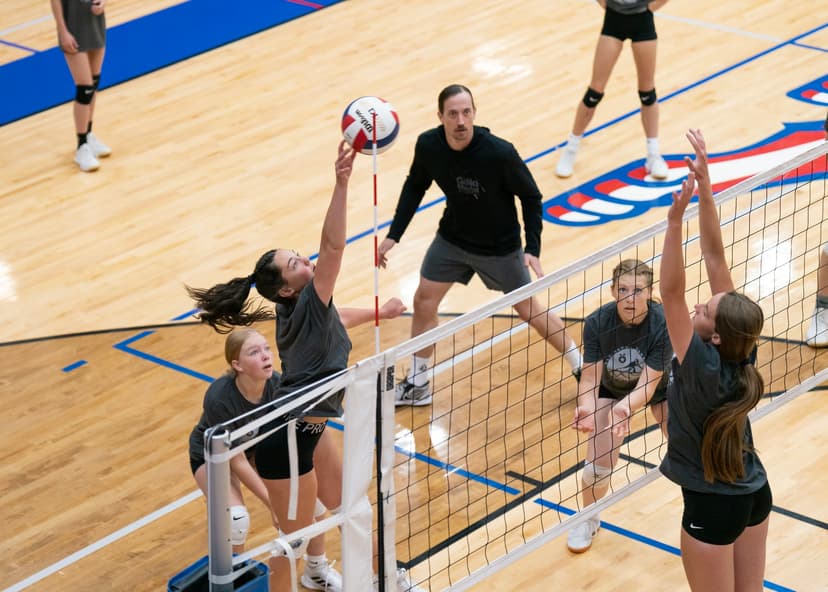
Practice at the JV level should balance skill-specific work with system work. Individual passing, serving mechanics, and spiking technique deserve dedicated time, these foundational skills are still being established and will carry athletes through their high school career if built well now.
System work at this level is primarily installing the vocabulary and basic patterns of your offensive and defensive systems. Athletes should know their rotation, their responsibilities on each serve-receive pattern, and the basic set calls your setter will use. Complexity can wait. Fluency with the basics now makes everything easier later.
Feedback: More Selective Than at the Youth Level
As athletes move into high school play, the feedback approach should begin to shift. At the youth level, more frequent feedback helps establish basic patterns. At the JV level, begin building athlete self-assessment. Ask athletes what they felt before you tell them what you saw. Let reps play out without interruption more often. The goal is building athletes who can self-correct, a skill they'll need every time they're on the court without a coach nearby.
Varsity High School and Competitive Club: Build for Performance
The Coaching Priority Shift
At the varsity and competitive club level, the balance shifts toward program performance. Skill development continues, it never stops, but system depth, competitive practice environments, and match preparation become primary concerns.
The best high school and club programs at this level share a consistent characteristic: they compete in practice every day. The competitive cauldron, mixing athletes, scoring drills, treating practice reps like match reps, produces athletes who are prepared for the intensity of a late-set tie game in a way that non-competitive practice environments cannot.
System Depth and Tactical Vocabulary
By varsity, your athletes should have fluent, automatic command of your base offensive and defensive system. The goal now is adding depth: secondary serve-receive patterns, tactical adjustments in the defensive system for specific matchups, setter options beyond the base set calls, and a collective ability to read and adjust to what the opponent is doing mid-match.
This is also the level where the coach's job shifts from being the primary source of decisions to developing athletes who can make good decisions themselves. Setters who can read the block and adjust their location. Liberos who can communicate to their team what they're seeing from the defensive side. Hitters who know their own tendencies and can use them strategically. These athlete-driven decisions are the difference between a team that executes a system and a team that plays volleyball.
Defensive System Maturity
At the varsity and competitive club level, a middle middle base with individual positional adjustments for specific opponents is appropriate for most programs. Coaches should be charting opponents, or at minimum, watching with intentional attention to where their hitters attack most frequently, and making positioning adjustments based on that data.
The most common high school defensive error at this level is not the wrong system. It is rigid adherence to one starting position regardless of what the opponent's offense is telling you. Good defenders at this level understand both their base position and why they would shade from it.
College: Individual Excellence Within a System
The Highest-Leverage Adjustment
At the college level, athletes arrive with established skills, systems experience, and in many cases, significant film and scouting backgrounds. The coaching challenge shifts from building skills to maximizing individual excellence within a specific team context.
College coaches working with players who have been in systems for years are dealing with deeply ingrained movement patterns and habits, both good and ones that need to be modified. The approach to technique correction at this level requires more nuance. The athlete understands what they're doing and why. Correction needs to be specific, backed by film where possible, and connected to their individual performance context.
Defensive Sophistication
At the collegiate level, defensive system complexity increases significantly. Rotational defense, man-up assignments for specific hitters, and tactical adjustments based on opponent tendencies from film review become standard tools. The ability to execute multiple defensive schemes, and to call and execute adjustments within a match, is expected.
This is where the payoff of building sound fundamentals at every previous level becomes visible. A college defender who has correct footwork, strong eye discipline, and a complete toolkit of defensive moves, staying on two feet, going to a knee, laying out, playing balls overhead, can execute any defensive scheme. A college defender with gaps in those fundamentals will limit the system you can run regardless of tactical sophistication.
Fitness, S&C, and Recovery at the College Level
College volleyball involves a full strength and conditioning program designed specifically for the demands of the sport. The anaerobic work-to-rest ratios that define volleyball should shape conditioning program design. Sport-specific power development, repeat jump training, and explosive movement work are appropriate at this level and support performance meaningfully.
The transition from high school to college often includes a significant increase in physical demands. Athletes who come from programs that kept skill practice primary and introduced sport-specific fitness thoughtfully are better prepared for that transition than athletes who were run through general conditioning programs that didn't match the demands of their sport.
The Common Thread: The Principles Don't Change
Every adjustment in this post, from how you structure a 10u practice to how you install a defensive scheme at the college level, flows from the same underlying principles. Skill first. Game-like reps. External cues. Competitive environments. Simple over complex.
What changes is where athletes are in their development, what they need most in this moment, and how much complexity they can actually execute under pressure. The coach who understands those principles deeply doesn't need a different philosophy for each level. They need the judgment to know how to apply the same principles appropriately to the athletes and program in front of them.
That judgment, the ability to meet athletes where they are and build from there, is what the most effective coaches at every level share. It is what GMS clinics teach, and what GMS+ is built to support.
Take the Next Step in Your Coaching
Whether you're looking to deepen your understanding of how to coach at your current level, or preparing to coach at a level you haven't worked with before, GMS+ and our coaching clinics are built to give you the framework, the tools, and the community to do it well.
Our certification courses take these principles from overview to full implementation, giving you a credential that reflects a genuine command of the methodology, not just exposure to it.
View Upcoming Coaching Clinics | Explore GMS+ and Get Certified
goldmedalsquared.com/volleyball-clinics | goldmedalsquared.com/gms-plus