Middle-Middle Defense in Volleyball
The first time I heard of Carl McGown, I thought he was a fool.
I'd read an article claiming that most attacked balls land in the middle of the court, at least 10 feet in from the end line. I knew this to be nonsense. Everyone knew the middle-back defender belonged near the end line, ready to charge forward. I sent Carl an email to set him straight.
His response: "Make your own damn chart."
Three matches in, I realized Carl might be onto something.
Where Balls Actually Go
That first chart changed the way I think about defense. The data was clear: the majority of attacked balls land in the middle of the court, well inside the end line. Not near the baseline. Not in the corners. Middle-middle.

Years later, as an assistant coach with the USA Women's National Team, I've charted over 10,000 attacks. The conclusion hasn't changed.
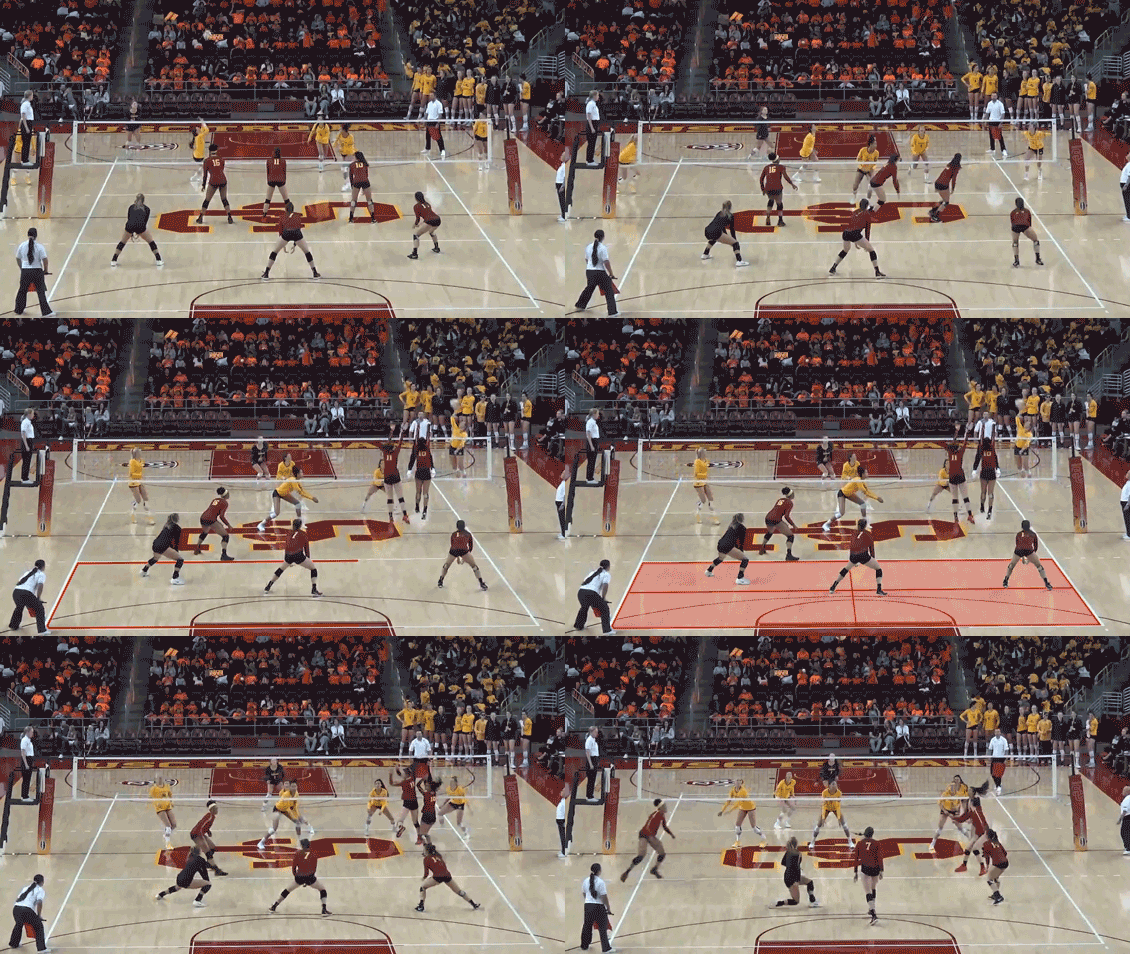
The most important principle in designing a defensive system is simple: put your best defenders where the most balls go.
For most attackers, 90 to 95% of them, that means middle-middle is the right place to stand.
Why Most Teams Get This Wrong
The instinct to park your middle-back defender on the end line is almost universal. It feels safe. It feels like you're covering the deep ball.
But the data doesn't support it. A defender standing on the end line is out of position for the vast majority of attacks. They're covering a shot that only a small percentage of hitters can consistently produce, and giving up the middle of the court in the process.
The middle-middle system fixes this. It positions your defenders based on probability, not instinct. And probability, applied consistently, wins more points.
The Full Guide Is Inside GMS+
The principle is straightforward. Installing it, and knowing when to adjust it, is where the real coaching happens.
The full guide covers:
- Base positioning for all six defenders in a middle-middle system
- How to read the setter and adjust before the attack
- The 5-10% of hitters who stress middle-middle, and how to account for them
- When to shade, when to cheat, and how to make those calls in-match
- How middle-middle pairs with your block to create a complete defensive system
- Coaching cues that translate the data into what players actually do on the court
Free to access. Create your GMS+ account and the full guide is there.