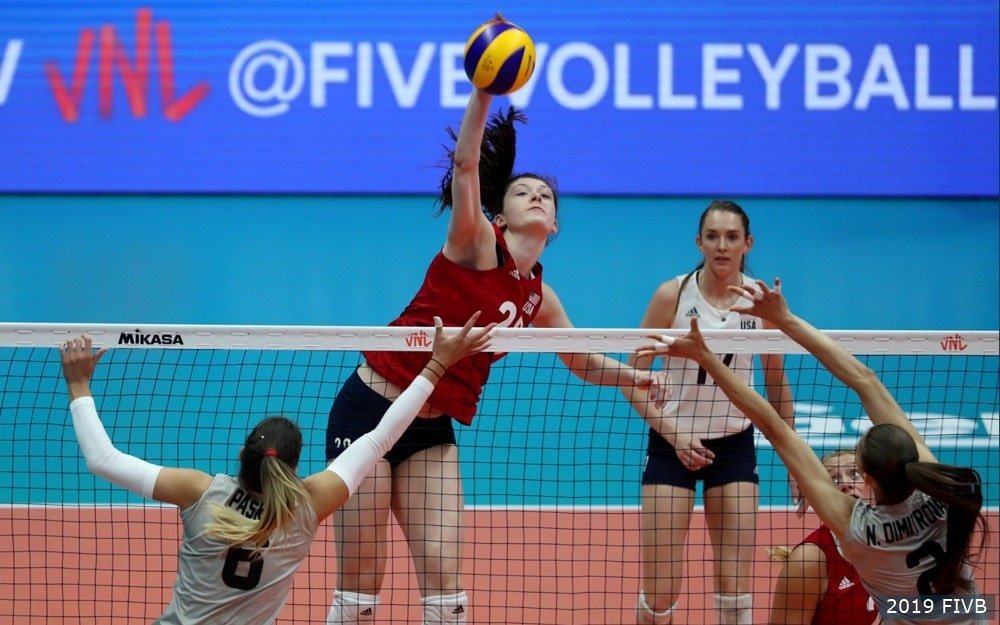
The Wrist Snap in Volleyball - Good or Bad?
Written by Chris McGown
If there's one topic that gets coaches fired up, it's wrist snap. Heated discussions, strong opinions, conflicting YouTube videos. Most coaches have a take and they're wiling to defend it.
Here's the question GMS gets asked most often: "My athletes hit so hard their attacks are going out of bounds. I want them to keep their stroke fluid without easing off too much. Should I be teaching wrist snap to help them produce topspin and keep the ball in?"
It's a fair question. Here's what the physics actually say.
What Actually Produces Topspin
Topspin happens when force is applied above the ball's horizontal equator , above center. That's it. The wrist position at contact determines where force is applied, which determines spin. The wrist snap that happens after contact doesn't change anything, because the ball is already gone.
This has been studied. Wrist snap does not meaningfully affect topspin. What it does do is introduce timing issues that reduce power and increase mis-hits.
The natural wrist turnover some coaches see in hard hitters? That's a result of the forces applied at contact , not a cause of them. Teaching it as a deliberate movement puts athletes into artificial positions that work against them.
What Actually Keeps the Ball In
Topspin is a factor in attack trajectory , but the least significant one. The ball flight during an attack is too short for spin to meaningfully redirect it. The factors that actually matter:
- Initial velocity , how hard the ball is hit
- Contact point and attack angle , how high the athlete is contacting and at what direction
- Set quality , a ball 5–8 feet off the net gives the attacker room to swing flat; anything tighter makes it nearly impossible
Athletes who are hitting out of the court almost always have a mechanics or set quality issue , not a topspin deficit. Fix the fundamentals and the ball stays in. Teach wrist snap and you've traded power for a problem that didn't need solving.
Note: this applies to attacks. A spike serve has enough flight time for topspin to be a meaningful factor , the coaching is different there.
How to Actually Coach It , Inside GMS+
The physics answer is clear. The harder question is how to help athletes develop topspin naturally, keep their attacks in, and build consistent mechanics , without over-coaching.
The full GMS+ guide covers the complete teaching framework Chris uses:
- Why demonstrating the full skill and letting athletes experiment first produces better results than technical instruction upfront
- The BYU gym approach to teaching direction , what GMS coaches said and what they didn't say
- The three mechanics areas GMS considers critical (footwork, double arm lift, torque for power) and how to clean them up before worrying about results
- Coaching questions that connect what athletes did to what happened , without over-directing
- How to build an environment where positive feedback centers on process, not outcome
- When to step in and when to let repetitions do the work
Free to access. Create your GMS+ account and the full guide here.