What Makes an Elite Volleyball Coach: The Mindset That Matters Most
Every volleyball coach wants to help their players improve. But the coaches who truly transform their programs, the ones whose athletes make dramatic leaps and whose teams consistently compete at the highest level, share certain characteristics that set them apart.
After more than 40 years of working with coaches at every level, from junior high to the Olympics, we've observed what distinguishes elite volleyball coaches from the rest. It's not just about knowing the game. It's about how you think about coaching decisions and how you approach your role.
Whether you're just starting your coaching career or looking to take your program to the next level, understanding this mindset can help you become the coach your players deserve.
Why Coaching Is Harder Than Rocket Science
Here's something that might surprise you: in many ways, coaching is more difficult than sending a rocket to the moon.
Rocket science is undeniably complex, it requires brilliant people working together with vast amounts of knowledge. But the outcome is fairly predictable. Follow the correct steps in the process, and the result is reliable. We know that the right inputs will produce a successful moon landing.
Coaching doesn't work that way. The same cue or drill that works for one athlete may not work for another. Players may show improvement over a couple of practices, then take a step backward the next week. And sometimes, changes in skill come out of nowhere with no clear explanation.
Coaching is an example of a complex system. Individual athletes interact with the practice environment in often unpredictable ways. Elite coaches embrace this complexity rather than fighting against it. They understand that there's no single "right way" that works for every player in every situation.
The 2% Rule: Why Small Details Create Big Results
Two factors compound the importance of good decision-making in volleyball coaching:
First, the time you have to coach your athletes is typically very limited. You might have 10-15 hours per week with your team if you're fortunate. Every practice, every drill, every piece of feedback matters.
Second, the margins between wins and losses in volleyball are incredibly small at all levels of play.
Consider this: in NCAA women's volleyball, teams that side-out at 62% instead of 60%, a difference of just two percentage points, can expect to win 20 matches in a 30-match season instead of 15. That's the difference between a tournament team and a losing record, created by a 2% improvement in one skill area.
This is why we say "there are no little things" in volleyball coaching. The difference between a win and a loss often comes down to small details.
Simple > Complex: The Elite Coach's Approach
We live in a world with vast amounts of easily accessible information. We also live in a world where everybody can claim to be an authority, regardless of qualifications. Chasing the latest fads, given the volume of information available, can lead to frustration and confusion, particularly for newer coaches.
Elite coaches resist this temptation. They understand that coaching is hard, which is why it's also incredibly fulfilling. But they also recognize that one of their primary jobs is to distill complex information into simpler, more usable formats.
When it comes to skill acquisition and team systems, cutting through unnecessary complexities and offering simpler solutions is what separates coaches who get results from those who overwhelm their players with information.
This doesn't mean elite coaches lack depth of knowledge. Quite the opposite, they understand concepts deeply enough to explain them simply. They can take sophisticated ideas and make them accessible to athletes at any level.
Convictions: Strong Opinions, Loosely Held
Elite coaches have confidence and conviction in the methods and principles they use. You should love the way you coach. That conviction has a substantial trickle-down effect, your assistant coaches and athletes will learn to love it too.
But here's where many coaches go wrong: they confuse conviction with rigidity.
The best coaches hold strong opinions loosely. They believe deeply in their approach while remaining open to evidence that might change their minds. They're constantly testing their own beliefs, learning from others, and refining their methods.
Elite coaches care about effectiveness above all else. They don't have specific agendas or egos when it comes to how they coach or how their athletes play the game. When it comes to the on-court part of coaching, what they care about is finding the most effective methods available.
Principles Over Plays
Coaching principles, contrary to popular belief, are liberating rather than restrictive.
Many coaches collect plays and drills like recipes, pulling them out when situations seem to call for them. But elite coaches operate differently. They develop a deep understanding of underlying principles that can guide their decision-making as a coaching staff.
With a solid understanding of coaching principles, you quickly learn how much creativity can be involved in day-to-day coaching. Principles give you a framework for evaluating new ideas, adapting to unexpected situations, and making decisions that align with your overall approach.
This is why the best coaches can watch a drill they've never seen before and immediately assess whether it's worth incorporating into their practice. They're not evaluating based on whether the drill looks cool or whether a famous coach uses it. They're evaluating based on whether it aligns with their principles.
Consistency Builds Trust
Elite coaches demonstrate remarkable consistency in their approach, their communication, and their expectations.
Players need to know what to expect from their coach. When standards shift unpredictably, when the same behavior is praised one day and criticized the next, athletes become anxious and uncertain. They start playing not to lose rather than playing to win.
Consistent coaches build trust. Their players know where they stand, what's expected of them, and how they'll be treated. This psychological safety allows athletes to take risks, make mistakes, and grow without fear.
Over the past 40 years, the best coaches we've observed have remained steadfast in their core approach while allowing room for tactical adjustments. They don't reinvent their program every season based on the latest clinic they attended. They evolve deliberately, making changes only when the reasoning is sound.
Embrace Your Coaching Identity
One of the goals elite coaches pursue is identifying and embracing their unique traits as a coach.
You are not John Wooden or Pat Summitt or Karch Kiraly. You shouldn't try to be. The best version of you as a coach will draw on your unique personality, experiences, and strengths, not someone else's.
This doesn't mean you can't learn from other coaches. You absolutely should. But elite coaches filter what they learn through their own identity. They take principles and techniques from others while adapting them to fit who they are and how they relate to their players.
Embrace what makes you unique. Build a coaching approach that amplifies your strengths and compensates for your weaknesses. Love the way you coach, and your players will learn to love it too.
Take the Next Step
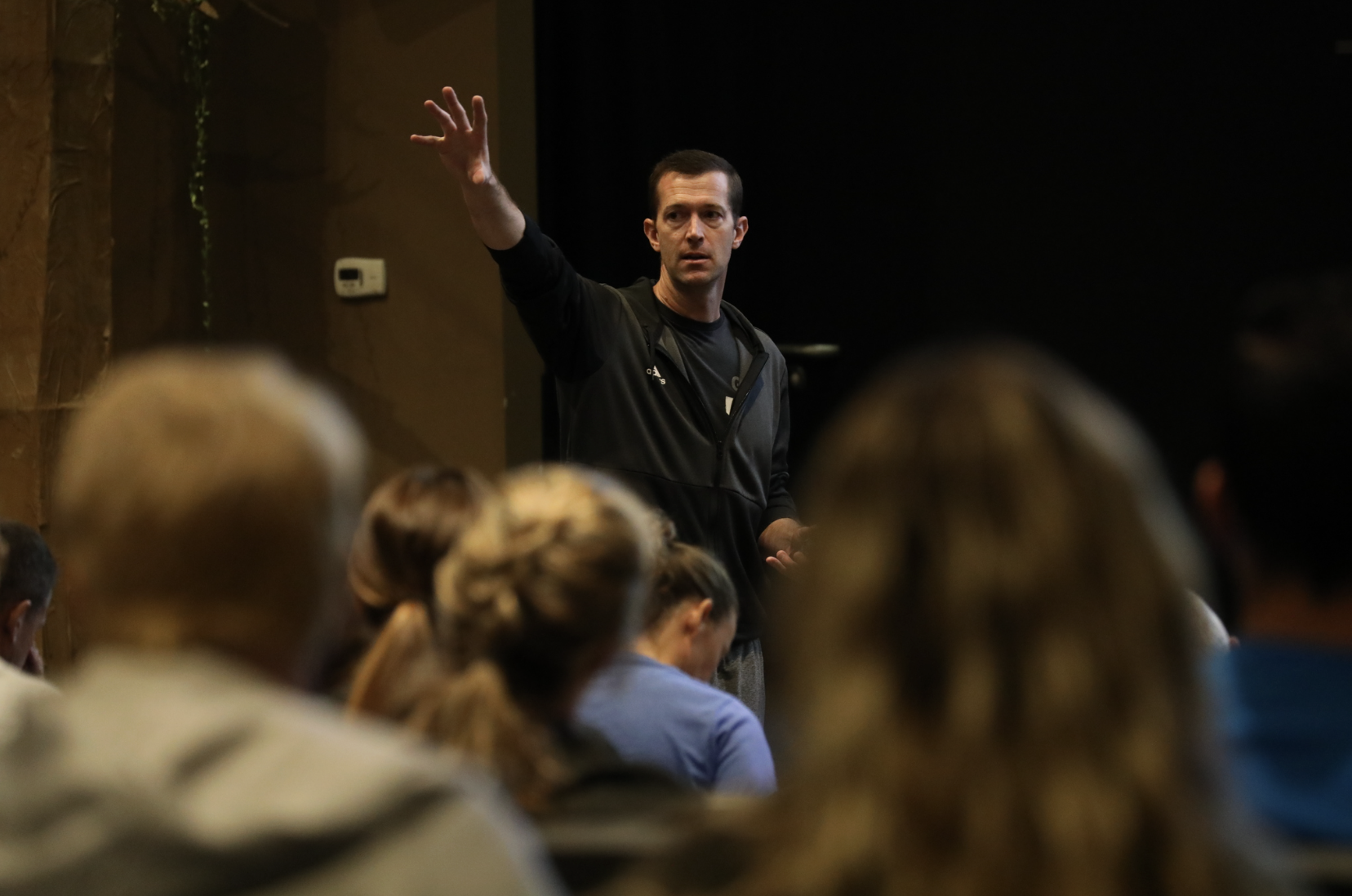
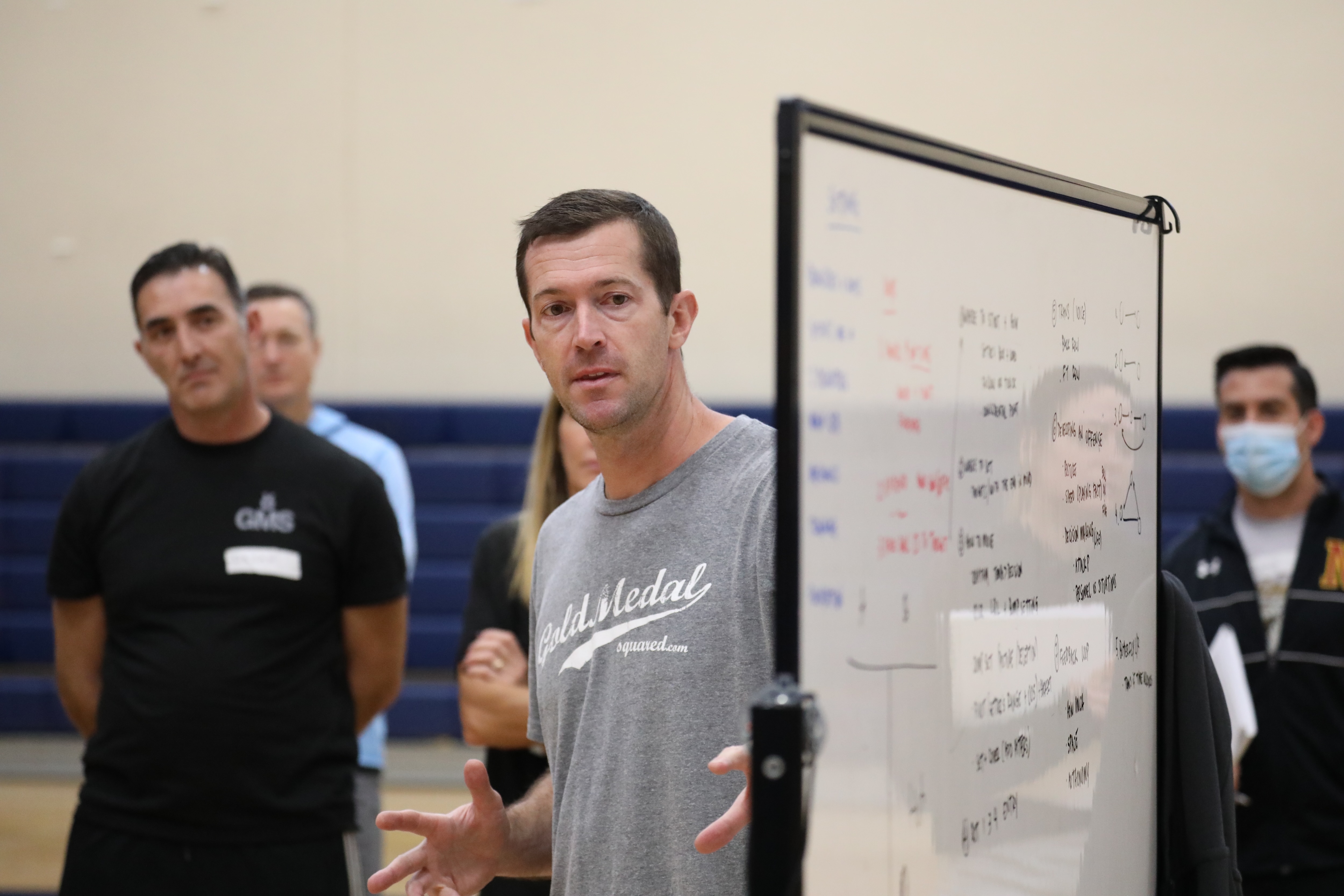
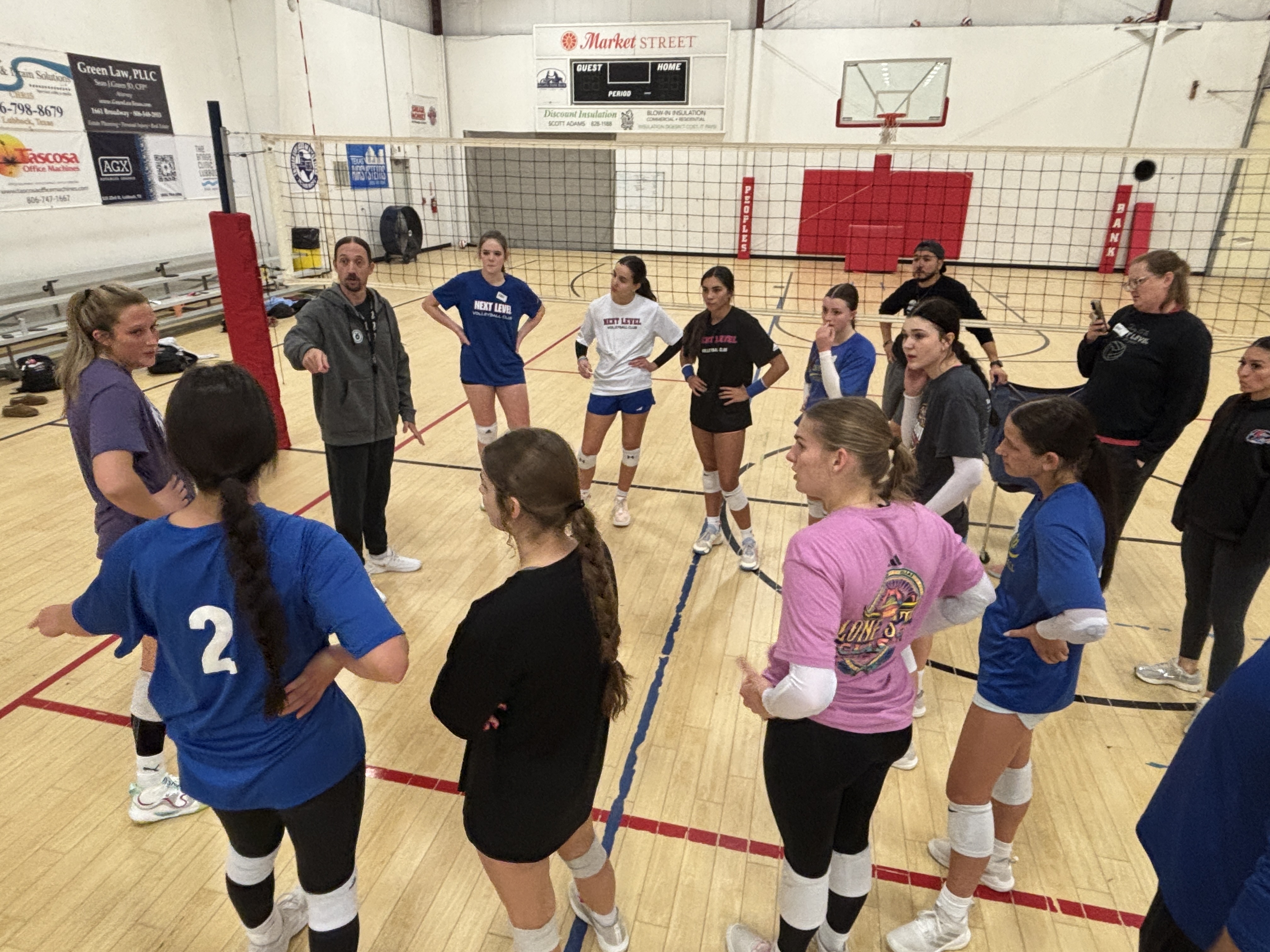
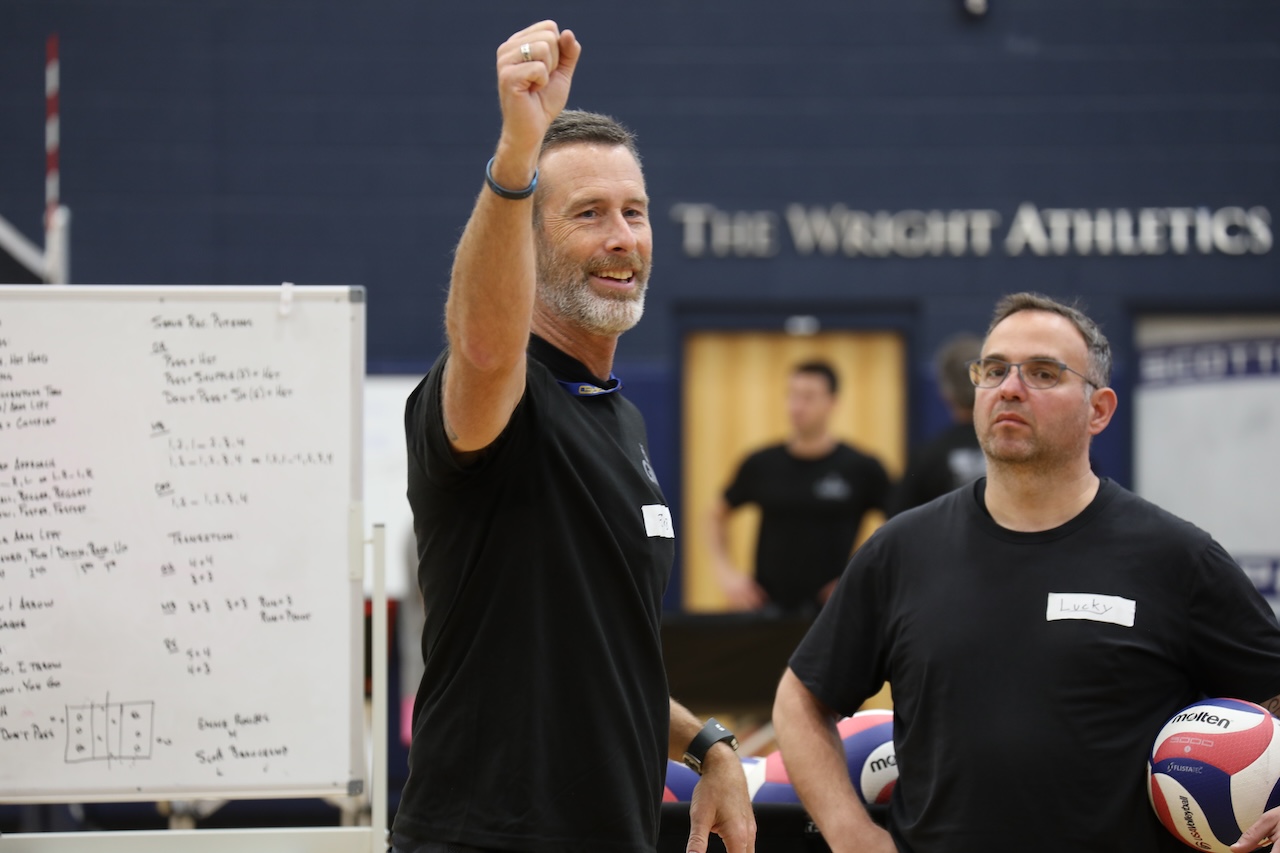
Ready to accelerate your coaching development now? Gold Medal Squared offers volleyball coaching clinics designed for coaches at all levels who want to transform the way they coach. Our clinics combine classroom presentations with hands-on court experience, giving you practical tools you can implement immediately.
View Upcoming Coaching Clinics | Explore GMS+ Online Resources
Gold Medal Squared has been helping coaches develop championship-level programs since 1982. Our methods are backed by Olympic coaches, research, and an incredible track record at every level of play.